Shmira
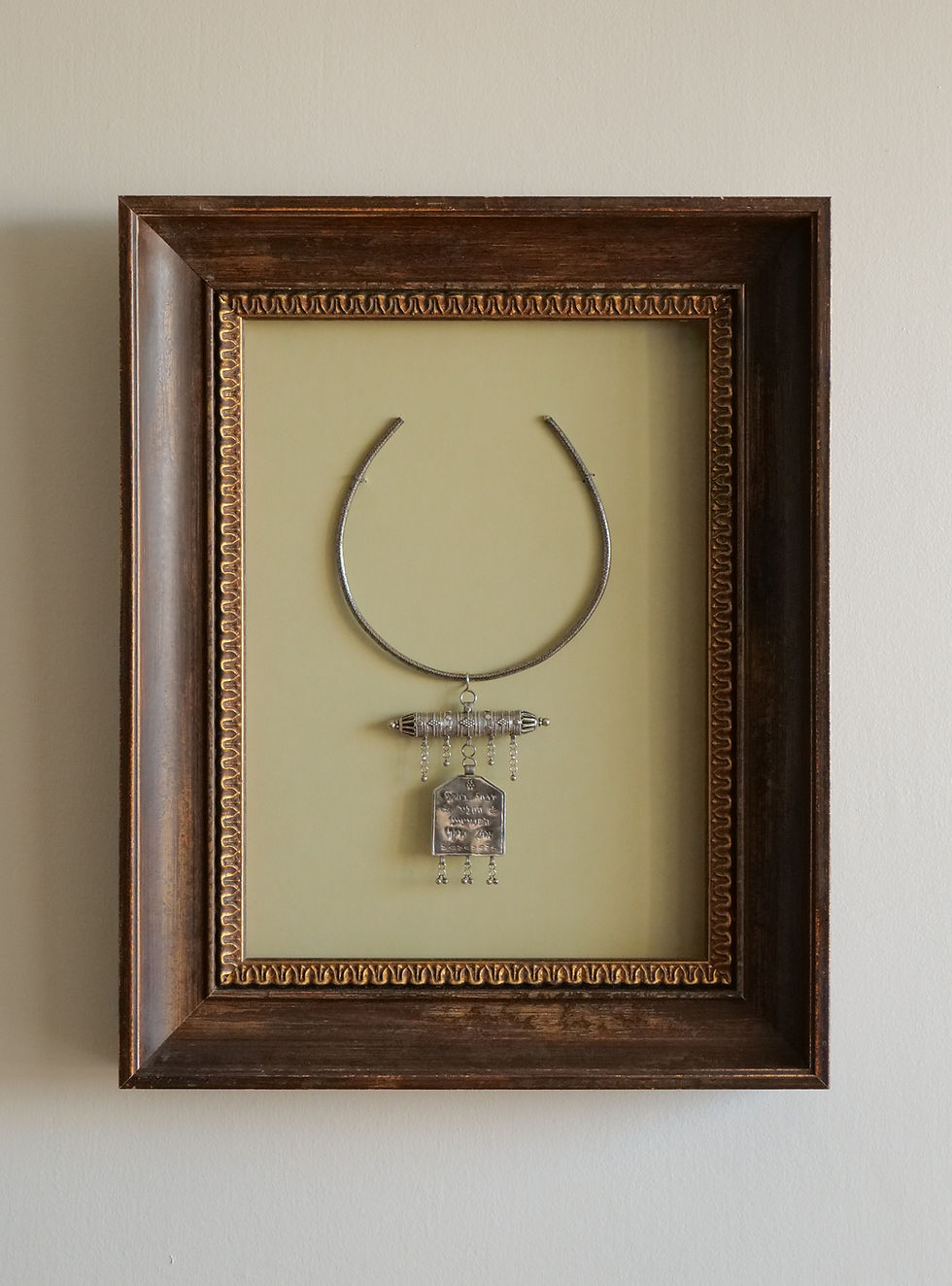
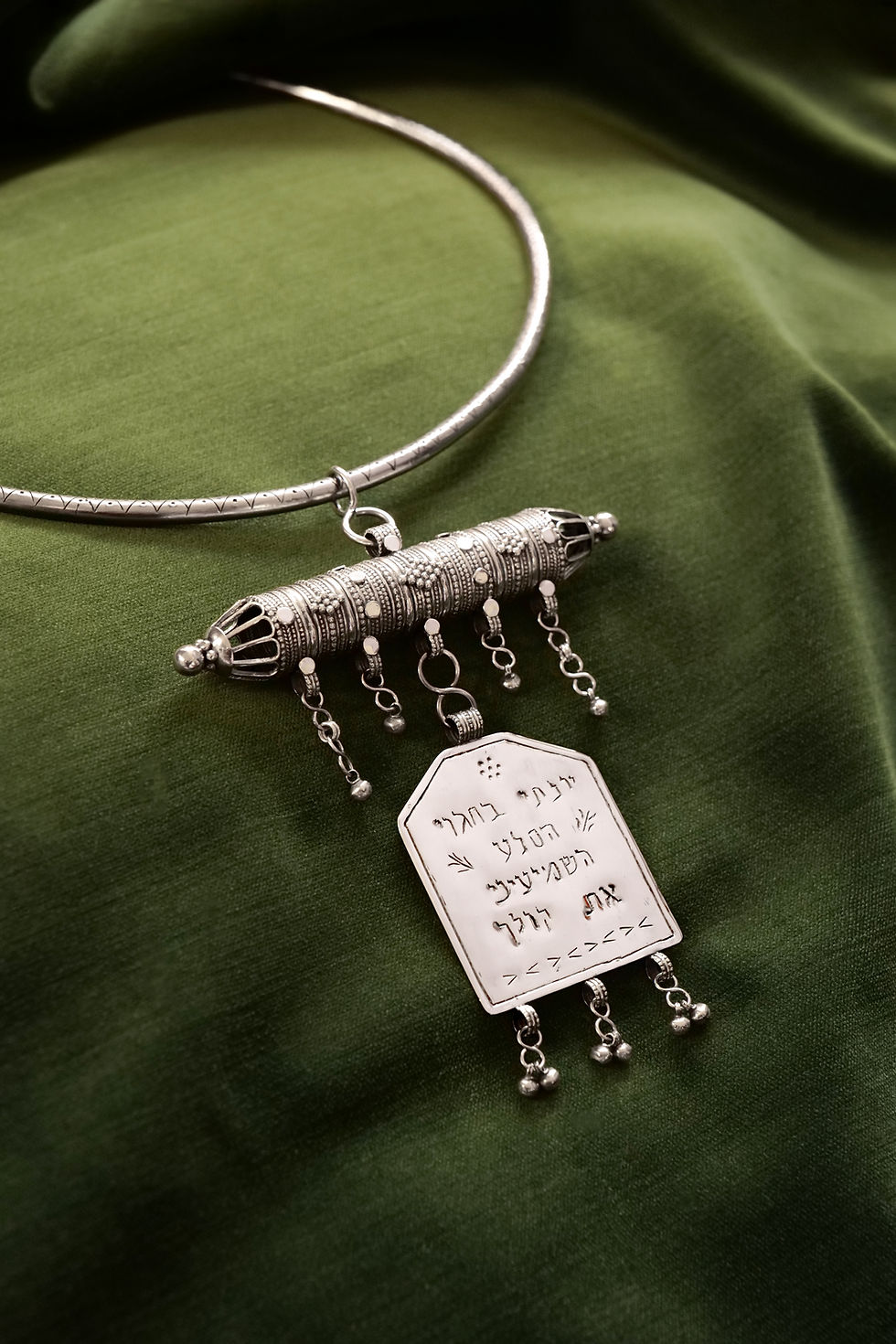
The piece is composed of three parts.
Part One
The upper section, which rests around the neck, is called a “Tuk.” This curved iron rod was used in certain regions of Yemen as a protective necklace. According to tradition, iron nails would be collected from seven different homes in the village, melted together, and shaped into a necklace. Iron was believed to carry protective qualities against the evil eye and harmful forces, and gathering nails from several households ensured that the protection came from many families within the community.
Part Two
Following the Tuk is the amulet case. Amulet cases were worn for protection against harmful spirits and as a source of blessing for the wearer.
The case is decorated with delicate ornaments and small rattling bells. It is closed from every side, as if what lies inside is a secret. According to certain beliefs, and to my understanding of Yemenite culture, once a secret is spoken, it loses its energetic power. In this way, Yemenite tradition often treated its spiritual texts.
Part Three
The final element, placed beneath the amulet case, is called a “Lawh.” The Lawh is a protective plaque intended to guard against the evil eye. It appears as a flat plate engraved with words.
On the plate, I chose to engrave a verse from the Song of Songs:
“My dove in the clefts of the rock… let me hear your voice.”
In this verse, the words are directed toward the woman who wears the jewelry. For me, the verse calls on her to let her voice be heard, both her spoken voice and her inner one. It invites her to express her personal prayer and to step out from the hidden place into the light, not through her appearance, but through her voice.

Exhibited at the
Soft Cover Exhibition
In the digital age, where reading is increasingly distanced from touch and the book loses its physical tangibility, the book returns to center stage as living testimony of culture memory, and emotion.
The exhibition “Soft Cover” examines the book not only as an object for reading, but as a living, breathing body that bears the scars of time and use and preserves within it layers of knowledge, meaning, and human touch.
The participating artists approach the book as open raw material. They cut, sew, paint, burn, and embed new images within it.
These actions are not merely gestures of love or nostalgia for print, but a way to return and question what place knowledge holds in a world that prefers fleeting and superficial imagery over depth, and what remains of the physical experience of reading when everything becomes transient information.